Iran stands firm as Situation Room reviews options
TEHRAN - Iran’s mistrust of the United States has deepened as Washington faces accusations of undermining the fragile two‑week ceasefire reached on April 8. From Tehran’s perspective, the United States is once again demonstrating that it cannot be trusted to honor agreements or respect regional sovereignty.
From the very beginning of the joint US-Israeli aggression on February 28, Iran’s military performance reshaped the strategic landscape. Within hours of the war’s outbreak, Iranian forces asserted full control over the Strait of Hormuz, declaring that no military or commercial vessel would pass without Tehran’s authorization. This decisive move stunned Washington and its regional allies, demonstrating Iran’s ability to impose order in one of the world’s most vital maritime corridors. The operation was described as a strategic chokehold that neutralized hostile intentions and prevented foreign forces from exploiting the waterway.
Iran’s early battlefield successes extended far beyond Hormuz. Iranian precision‑guided missile strikes targeted US‑aligned positions across the region. Iranian naval units executed coordinated maneuvers that forced US vessels to retreat from contested zones. By the end of the first week, Tehran declared that the enemy had suffered a historic and humiliating setback, a position echoed by regional and international observers who noted the unexpected resilience and coordination of Iran’s armed forces.
Although the April 8 ceasefire temporarily paused direct clashes, tensions around the Strait of Hormuz remained high. Iran maintained that it was exercising its lawful right to regulate passage until all ceasefire terms were respected. On Saturday, Iranian officials again asserted control over the strait, emphasizing that while limited passage was being allowed, full normalization would only occur once the United States demonstrated compliance with the agreement. Tehran argued that responsible management of Hormuz was necessary to prevent escalation and ensure regional stability.
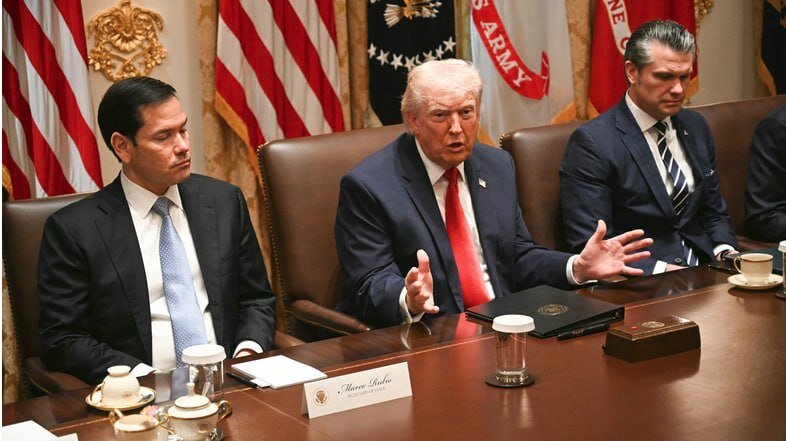
Inside Washington, the crisis triggered urgent deliberations. US media reported that Trump convened a Situation Room meeting on Saturday to assess the status of the ceasefire and consider further actions. Senior officials debated the pace of negotiations, access to the Strait of Hormuz, and whether the administration should escalate pressure on Tehran as the ceasefire deadline approaches.
Speaking later in the Oval Office, Trump accused Iran of attempting to “blackmail” the United States by not fully reopening the Strait. He had earlier warned that Washington was prepared to renew the war if Iran did not comply with US demands—echoing the threats he made before the ceasefire, when he vowed to destroy “every power plant and major bridge in Iran” if the strait was not opened by his deadline.
Iran rejects these accusations outright. Officials in Tehran argue that the United States is responsible for destabilizing the ceasefire through continued military pressure, coercive naval deployments, and threats that violate the spirit of the April 8 agreement. From Iran’s viewpoint, Washington’s approach reveals that the US seeks domination, not dialogue.
Iran has also made clear that it will not participate in any new round of talks if the United States continues maritime interference and pressure tactics. Iranian officials insist that negotiations must be based on mutual respect, not ultimatums. They argue that the US cannot demand concessions while simultaneously threatening renewed war and imposed a blockade on Iranian ports.
At the same time, Iran emphasizes that it is not opposed to diplomacy. Tehran has stated that it is prepared to engage in talks that protect international interests, ensure secure navigation for all regional states, and translate Iran’s military achievements into a stable political outcome. Iran argues that the country’s battlefield successes since February 28 have strengthened its strategic position and demonstrated its ability to defend its sovereignty against foreign aggression. In this view, any political process must reflect the realities created by Iran’s resilience.
This message was reinforced on Saturday during Army Day ceremonies. In a statement marking the occasion, Leader of the Islamic Revolution Ayatollah Seyyed Mojtaba Khamenei praised the Iranian Army for its role in defending the nation during the recent imposed war, just as it had in previous conflicts. He said the Army of the Islamic Republic of Iran has been “courageously defending the land, water, and the flag to which it belongs” in the face of a US‑Israeli war of aggression.
“With its strong divine and popular support, and in dense and solid ranks, shoulder to shoulder with other warriors of the armed forces, it has confronted two armies at the forefront of disbelief and arrogance, making their weakness and humiliation evident in the eyes of the world,” the message read. The statement echoed Iran’s broader narrative that the ceasefire represents a strategic victory and a setback for its adversaries.
As the April 22 deadline approaches, both sides face mounting pressure. Washington must decide whether to escalate or pursue diplomacy, while Iran balances its readiness for dialogue with its insistence on sovereignty and security. For now, Tehran’s position remains firm: it will not negotiate under pressure, but it is willing to engage in diplomacy that respects international law and allows it to convert its military resilience into a durable political settlement.
Leave a Comment